
一米阳光
Can US afford cost of clean-energy protectionism in race for AI capabilities?_我的网站

A |
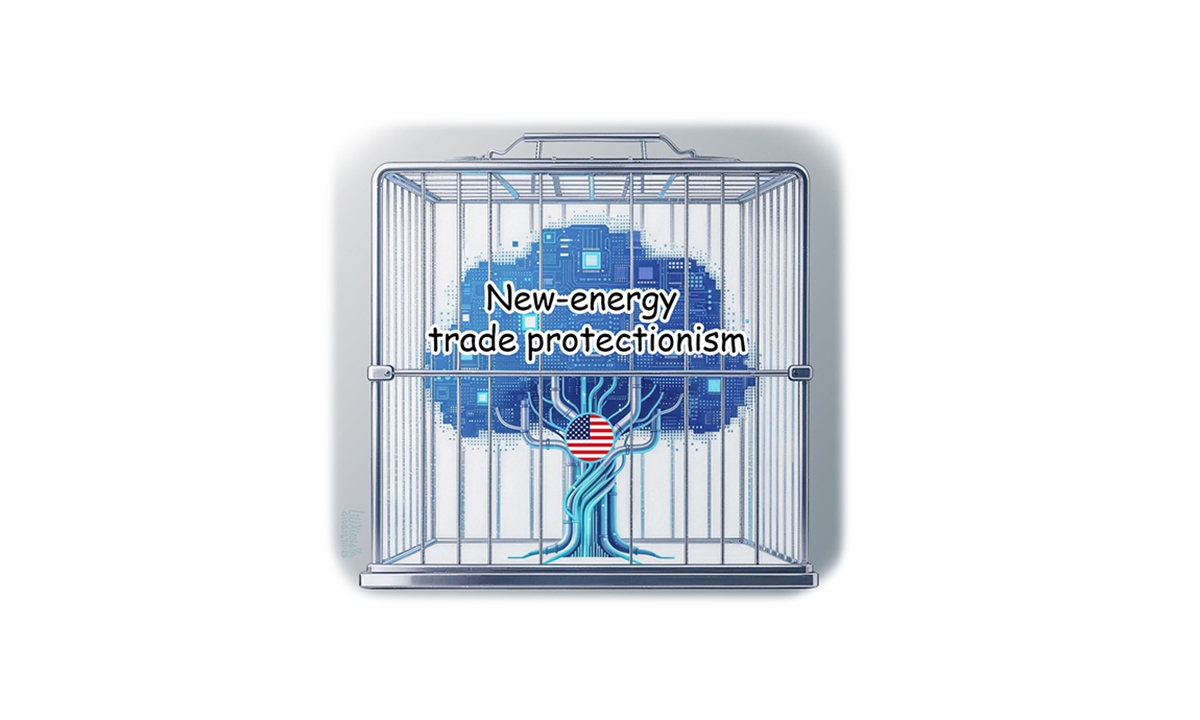
Recent media reports have questioned whether a natural gas plant built to power an Amazon data center project in Texas could become the largest climate polluter in the US. The controversy, whatever the eventual outcome, offers a reality check for America's artificial intelligence (AI) drive.
It exposes a growing contradiction: The US is racing to expand its AI capabilities, yet its protectionist trade policies are making it harder and more costly to access some of the clean-energy technologies needed to sustain that expansion. This raises a broader question: Can an energy-intensive AI race afford the costs of renewable energy protectionism?
The US is entering a new era of rising electricity demand. Data centers, the backbone of the AI economy, are emerging as one of the fastest-growing sources of power consumption. Much of that demand is still being met by fossil fuels: The International Energy Agency reports that natural gas supplies more than 40 percent of the electricity used by data centers in the US, making it their largest source of power.
So, it's not surprising that the expansion of data centers has raised concerns over their environmental impact and the pressure they could place on local power systems and electricity bills. A Gallup survey conducted in March found that seven in 10 Americans opposed the construction of AI data centers in their local area, including 48 percent who strongly opposed such projects.
The findings point to a broader challenge for the US: The race to develop AI is increasingly becoming a race to meet growing energy needs. Addressing this challenge will require more than advances in computing technology; it will also depend on an energy system capable of delivering large amounts of reliable, affordable and cleaner power. That, in turn, will require faster development and broader deployment of clean-energy technologies, from solar power to energy storage.
Yet in the clean-energy sector, the US has increasingly relied on protectionist trade measures that limit access to cost-competitive products from global markets. The country has placed greater emphasis on expanding domestic manufacturing capacity, but rebuilding entire clean-energy supply chains at home is a costly and time-consuming process. Even if expanded domestic production is achieved, it is likely to come at a higher cost, making the deployment of renewable technologies more expensive and potentially slower.
The solar industry offers a clear illustration of this policy direction. The US has continued to expand trade barriers in the sector. Reuters reported that the US government announced on Thursday a series of price floors and a 15 percent tariff on products made from polysilicon, a raw material used in solar panels.
The challenge lies in the limited scale of the US polysilicon industry. Reuters reported that the country has two polysilicon factories. Against this backdrop, relying on domestic polysilicon production while restricting access to imports runs counter to the goal of expanding solar power in the US. The country risks creating barriers that ultimately constrain its own access to the global supply chains needed for growth.
The pressing issue for the US is the speed at which new power demand is emerging. The expansion of data centers is creating electricity needs that cannot wait for domestic clean-energy capacity to develop gradually. Global supply chains can provide the scale and speed required in the near term. By narrowing access to these sources, the US risks turning clean-energy policy into a drag on the infrastructure needed for its AI race.
The US has placed AI high on its economic and technological agenda. The outcome of this race will matter greatly, as financial markets are also watching whether America can turn its AI efforts into commercial success.
This leaves the US with a difficult choice: Can it afford the cost of clean-energy protectionism while racing to build AI infrastructure? The answer may be no. Trade barriers that limit access to competitive renewable technologies could ultimately become a constraint on the AI expansion that Washington is seeking to accelerate.
The author is a reporter with the Global Times. [email protected]
。 AI摘要 针对被建议再选台北市长,黄珊珊回应称卸下公职后的下一步无需向任何人交代。她表示这半年调整生活节奏,照顾身体并体会工作外风景,认为不必急于回答未来规划。

B | 传出有台湾民众党议员参选人不满台北市长蒋万安不个别辅选,仅在联合造势时才会现身。前“政务委员”张景森24日则挑拨称,民众党现在太弱了,建议征召台北市前副市长黄珊珊参选台北市市长。对此,黄珊珊发文回应称,卸下公职的下一步,没必要跟任何人交代。 黄珊珊指出,卸下公职以后,很多人都在问下一步,“其实这是我的事,而且我没必要跟任何人交代!老实说,这个问题我被问过很多次。每次选举结束、每次工作改变,大家好像都很担心,我的人生会突然没有下一步。以前的我,大概也可能急着想找出答案。但这半年,我才觉得,不必急着回答。” 黄珊珊在2022年曾以无党籍参选台北市长,获得时任民众党主席柯文哲支持,对战蒋万安与民进党候选人陈时中。当时黄珊珊拿下25.14%得票率,陈时中有31.93%得票率,蒋万安则以42.29%得票率当选。

C | 黄珊珊表示,上一次有这样的心情,是2022年选举结束以后,从22岁当律师到现在,已经连续工作30多年,每天都被会议、行程、和各种问题追着跑,家人大多只能在电视上看到自己。 黄珊珊称,这半年自己没有停下来,只是换了一种速度,好好照顾身体,认真工作,也认真看看工作以外的风景,让自己回到更简单的人际关系,以前的自己,总觉得人生一定要不断往前冲,现在才知道,有些路不能赶,人走得慢一点,反而看得见更远的风景。
Current article:http://lwfdsd.wenwancaomohenenqiongpangshun.bond/i1q5h/20260826/4404.html
Published on:16:49:15


1
From an online "weight-loss hack" to protective manicures: The humble bean that connects harvest, community and home in Shandong2
"물만 마셨는데 펭귄처럼 걸어요"...보름 만에 20㎏ 빼려다 뇌 손상 온 30대女 [헬스톡]3
《死神 千年血战篇 祸进谭》最新话IMDb评分10分 久保带人亲自监制4
高光褪去CXO产业如何走出“围城”5
外企在中国|沃尔玛扎根中国三十年,赋能消费升级与民生提质6
冉莹颖邹市明车内争吵登上热搜 女方委屈落泪7
一个原教旨主义产品经理眼中的世界8
2025国家补贴什么时候结束?2025国补政策最新消息:统一截止时间为2025年12月31日9
微信也可以拨打110:成都市公安微信报警平台正式上线10
配置升级 2026款MG5/MG Cyberster将于6月30日上市11
习近平同约旦国王阿卜杜拉二世出席签字仪式12
“五一”假期将至 文旅市场持续升温 各地“花式”拉动消费热情13
浓郁的地方特色全新的味觉体验——招商引资项目“呵呵奇”饮料强势登场14
奥克兰北岸发现神秘粉末,一人被送往医院15
拼多多做爆款链接的三种方式
- 随机推荐
1
CN2 GIA不是万能药:搬瓦工的三种线路,该怎么选?2
若快船遭重罚会进仲裁程序 小卡坚信会在9月结束3
Know All About Avatar: Fire and Ash's Varang, Played By Charlie Chaplin's Granddaughter Oona Chaplin4
我国健儿世锦赛再发光 陈彦凝太极剑勇夺金牌5
中信期货:PX成本松动,供需同升阶段跟随油价波动6
坂本花織がつくり出した“平和な一枚”に中国メディア賛辞「これは忘れられない」引退撤回を求める声も【冬季五輪】7
50国发表反俄声明,美国未参与!中方最新发声:在乌克兰问题上的立场客观公正、一以贯之,敦促当事方推动局势降温8
原创 为什么越来越多的人对旅游失去了兴趣?这可能是最中肯的原因9
总书记的人民情怀丨“营造风清气正的政治生态”10
雷克萨斯LC敞篷车概念官地图发布11
重庆长安发布公告:中国长安汽车集团变更为辰致汽车科技集团12
奥克兰一女子在Pak'nSave偷东西未遂后大喊大叫,员工被打脸13
想让AI搜索引擎引用你的内容?照着这5步改14
Lilian Weng最新对话:首谈离开OpenAI创业,以及AI研究的现实扭曲场15
从“量身定制”的新场景 看未来产业发展密码,从“量身定制”的新场景 看未来产业发展密码